Giant Hogweed
| Country of origin | Caucasus region |
|---|---|
| First documented | 19th century |
| Original use | Ornamental garden plant |
| Position | Full sun to partial shade |
| Soil | Moist, fertile soil |
| Height | 2 to 5 metres |
| Flowering time | June to July |
| Key garden-care task | Control and eradication (highly invasive) |
| Caution | Causes severe phytophotodermatitis (skin burns) |
Origin and history
Giant Hogweed (*Heracleum mantegazzianum*) originates from the Caucasus region, specifically the mountainous areas between the Black and Caspian Seas. It was first documented by Western botanists in the 19th century, during a period of intense botanical exploration and collection of exotic species. The plant was introduced to gardens in Western and Central Europe as an impressive ornamental specimen around the mid-1800s, prized for its dramatic size and architectural form. Its spread beyond cultivation began in the late 19th and early 20th centuries, as it escaped from botanical gardens and private estates. The history of its introduction is a classic example of how a plant imported for horticultural novelty can become a significant ecological problem. Its subsequent naturalization and invasive spread across Europe and North America were unintended consequences of its initial cultivation.
What it is designed for
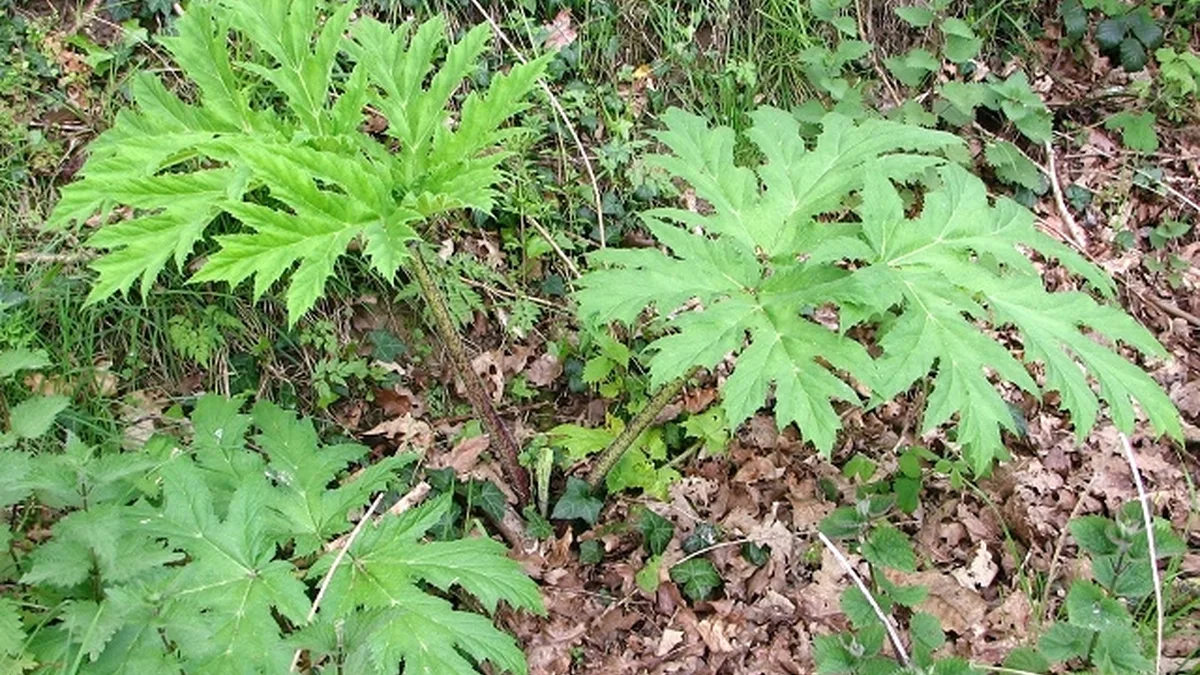
Giant Hogweed is a flowering plant, not a human-made tool, so it has no design purpose in the traditional sense. Its biological characteristics, however, are adaptations for survival and reproduction in its native habitat. The plant is designed for rapid growth and dominance, capable of reaching heights of over five meters in a single season to outcompete surrounding vegetation for sunlight. Its large, compound umbels of white flowers are designed to attract a wide array of pollinators, ensuring prolific seed production. The plant's massive leaves are engineered to capture maximum solar energy, fueling its aggressive growth cycle. Furthermore, its sap contains phototoxic furanocoumarins, a chemical defense designed to deter herbivores and protect the plant from damage. In its native ecosystem, these traits are balanced by natural competitors and environmental pressures, but in introduced regions, they contribute to its invasive nature.
Development and versions
As a biological species, Giant Hogweed does not have "versions" in a manufactured sense, but it exists as a distinct species within the *Heracleum* genus. Its development refers to its evolutionary history and its subsequent spread as an introduced species. Botanically, it is closely related to other large hogweeds, such as *Heracleum sosnowskyi* from the Caucasus and *Heracleum persicum* from Iran, which have also become invasive in parts of Europe. The "development" of Giant Hogweed as a widespread invasive problem occurred over decades, as populations established, reproduced, and adapted to new environments outside its native range. There are no cultivated varieties or breeds marketed for gardens, as its dangers and invasive status have long been recognized. Its proliferation is a result of natural seed dispersal via watercourses and human activity, not deliberate breeding programs. The management of this plant now focuses on containment and eradication, not on further horticultural development.
Pros and cons
There are no genuine pros to cultivating or encouraging the growth of Giant Hogweed in a garden or natural landscape. Its cons are severe and well-documented. The primary danger is its phototoxic sap, which causes severe, painful burns and blistering when skin is exposed to sunlight after contact, potentially leading to long-term scarring and sensitivity. A common and serious mistake is attempting to strim or cut the plant without full protective clothing, resulting in widespread sap exposure. The plant is highly invasive, forming dense monocultures that outcompete native flora, reduce biodiversity, and increase erosion along riverbanks when it dies back in winter. Those who regret its presence include landowners facing costly, multi-year eradication programs and public agencies responsible for protecting public safety on footpaths and waterways. Furthermore, its control is hazardous, requiring specialist contractors for large infestations, and any remaining seed bank can germinate for several years, making eradication a prolonged effort.
Who it suits
Giant Hogweed suits no responsible gardener or land manager. It is a legally controlled weed in many countries, such as the UK and parts of North America, where it is an offense to plant or cause it to grow in the wild. The only context where interaction with the plant is suited is for trained, fully equipped invasive species control professionals undertaking eradication projects. These individuals wear heavy protective clothing, including full-face visors and chemical-resistant gloves, to safely handle the plant. Botanists and ecologists studying invasive plant ecology may also work with it under strict safety protocols. For the general public, the only suitable action is to learn to identify the plant accurately, avoid all contact, and immediately report large infestations to the relevant local environmental authorities. It is entirely unsuitable for any ornamental or functional role in garden design due to its extreme hazards and destructive ecological impact.