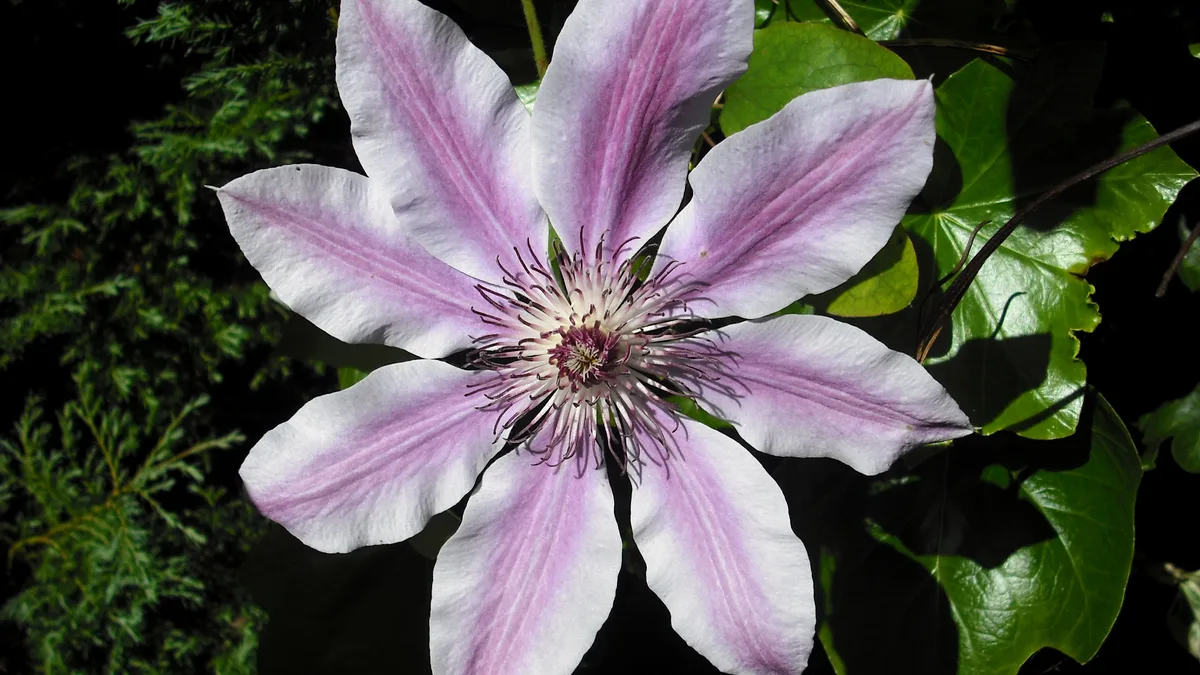
Clematis
| Country of origin | Various (genus native to many temperate regions) |
|---|---|
| First documented | Ancient times (cultivated for centuries) |
| Original use | Ornamental garden plant |
| Planting time | Early spring or early autumn |
| Pruning time | Varies by group (Group 1, 2, or 3) |
| Position | Sun to partial shade (roots shaded, tops in sun) |
| Soil | Moist, well-drained, neutral to alkaline |
| Hardiness | Fully hardy to frost tender (varies by species/cultivar) |
Origin and history
Clematis is a genus of climbing, perennial plants primarily native to temperate regions of the Northern Hemisphere, with significant centers of diversity in East Asia, particularly China and Japan, and also in Europe and North America. The cultivation of clematis in gardens dates back centuries in Europe, with documented evidence from the 16th century. The Victorian era in the 19th century saw a marked increase in interest and hybridization efforts, particularly in Great Britain. Many of the large-flowered hybrids that are popular today were developed from species originating in China and Japan, which were introduced to European horticulture in the 18th and 19th centuries. The genus name itself is derived from the Ancient Greek word for a climbing plant. The long history of cultivation has resulted in over 300 species and thousands of cultivated varieties, each with distinct characteristics.
What it was bred for
Clematis has been selectively bred over centuries to enhance specific ornamental traits for garden use. A primary breeding goal has been to dramatically increase flower size, moving from the smaller, often bell-shaped flowers of many species to the large, showy blooms seen in modern hybrids. Breeders have also focused on expanding the color palette beyond the common whites, purples, and blues to include rich reds, vibrant pinks, deep velvety purples, and bicolored flowers. Another key aim has been to extend the flowering season by developing cultivars that bloom at different times, from early spring to late autumn. Breeding has also targeted improved plant habits, including more compact growth for smaller spaces and increased vigor for covering large structures. Furthermore, resistance to common ailments like clematis wilt has been a persistent, though not always fully successful, objective in breeding programs.
Life cycle
Clematis are perennial plants, meaning they live for multiple years, with a life cycle that involves a period of dormancy during winter in colder climates. In spring, growth resumes from buds on the previous year's stems or from the base of the plant, depending on the pruning group. The plant then enters a vegetative growth phase, producing long vining stems with paired leaves that grasp supports via twining leaf petioles. Flower buds form and bloom according to the cultivar's specific timing, which can be in spring, early summer, late summer, or autumn. After flowering, many varieties produce attractive, fluffy seed heads that persist into winter, providing further ornamental interest. The plant then gradually ceases growth as temperatures drop, with the above-ground growth dying back for some types, while others retain a woody framework. With proper care, a clematis plant can live and thrive for several decades in the garden.
Character and appearance
Clematis are predominantly climbing plants, using their leaf stalks to twine around supports such as trellises, arbors, or other plants. Their appearance is incredibly diverse, with flower sizes ranging from small, nodding bells less than an inch across to large, flat saucers exceeding eight inches in diameter. Flower forms vary significantly and include single, star-shaped blooms, double and pom-pom forms, tulip-shaped bells, and elegant nodding urns. The foliage is also variable, with some species offering finely dissected, fern-like leaves while others have broad, leathery leaflets. The plant's habit can range from vigorous, large-scale climbers reaching over 20 feet to more restrained, shrubby types suitable for containers. In winter, the persistent, silky seed heads of many varieties add a textural, decorative element to the dormant garden.
Pros and cons
A significant advantage of clematis is its vertical gardening capability, allowing gardeners to add height and color without occupying much ground space. The extraordinary diversity in flower form, color, and bloom time means there is a clematis suitable for almost any garden design scheme. Once established, many varieties are long-lived and reliably perennial. A major con is their susceptibility to clematis wilt, a fungal disease that can cause sudden collapse of stems and foliage, particularly in the large-flowered hybrids, which can be alarming and disheartening for growers. Their climbing nature necessitates providing a suitable, permanent support structure from planting, which adds to initial effort. Some varieties can become woody and bare at the base, requiring careful companion planting or strategic pruning to mask this tendency. Novices often regret choosing a cultivar without understanding its specific pruning group, leading to reduced or misplaced flowering.
Who it suits
Clematis suits gardeners who wish to maximize vertical space and create layers of interest on walls, fences, pergolas, and through other shrubs or trees. It is ideal for cottage garden enthusiasts seeking a romantic, abundant display of blooms through the season. Patient gardeners who understand the need for proper planting technique, with the crown deep in the soil, and who are willing to learn the specific pruning requirements will be most successful. It is less suited to those seeking extremely low-maintenance, "plant-it-and-forget-it" landscaping, as clematis benefits from attentive care. Gardeners with very small spaces, such as patio containers, can still enjoy clematis by selecting from the range of compact, small-flowered cultivars. It is also a good choice for wildlife gardeners, as many species varieties provide nectar for pollinators and the seed heads offer shelter for insects.