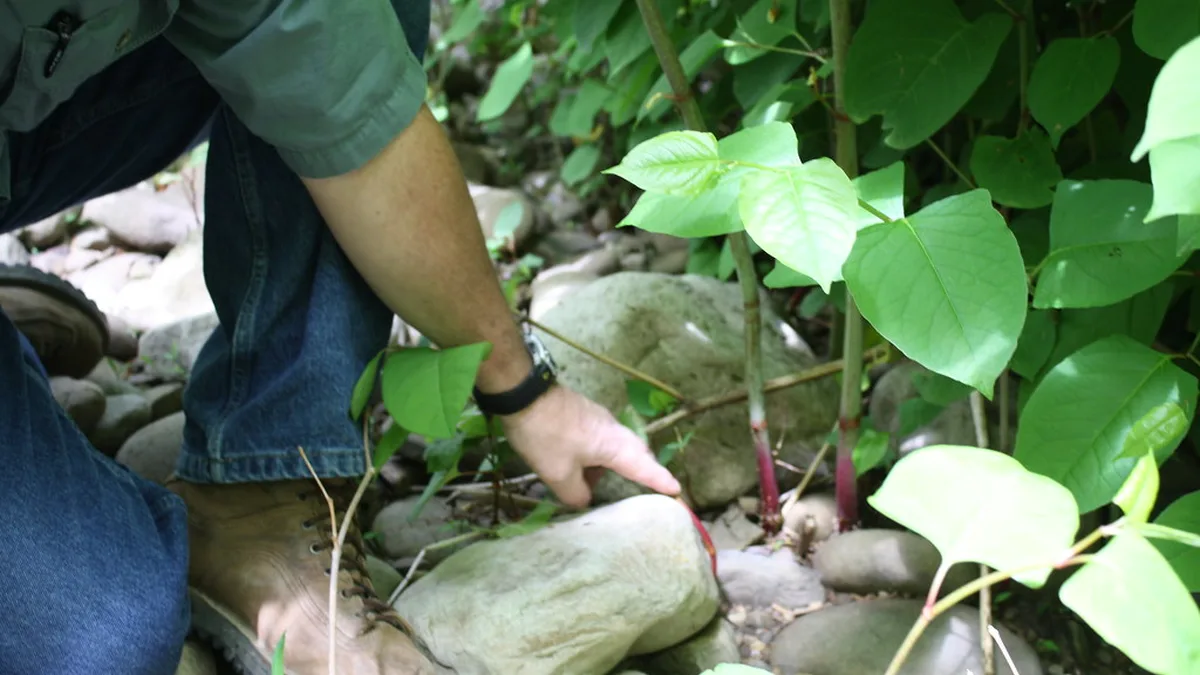
Japanese Knotweed
| Country of origin | East Asia (Japan, China, Korea) |
|---|---|
| First documented | 19th century (introduced to West mid-1800s) |
| Original use | Ornamental garden plant |
| Growth habit | Vigorous, invasive perennial |
| Stem appearance | Bamboo-like, hollow, with purple speckles |
| Leaf shape | Broadly ovate with a flat base |
| Flowering period | Late summer to early autumn |
| Control priority | High (requires year-round management) |
| Legal status in UK | Controlled waste (requires specialist disposal) |
Origin and history
Japanese Knotweed originates from East Asia, specifically Japan, China, and Korea. It was first documented by Western science in the mid-19th century. The plant was introduced to Europe and North America in the late 19th century, primarily through the horticultural trade. It was promoted by botanical gardens and plant collectors for its aesthetic appeal and rapid growth. Its introduction was part of a wider Victorian fascination with exotic flora from newly accessible regions. The plant's invasive potential was not recognized or understood at the time of its introduction, leading to its widespread dispersal.
What it is designed for
Japanese Knotweed is a perennial plant designed by natural selection for survival in harsh, dynamic environments. Its primary biological design is for rapid colonization of disturbed ground, such as volcanic slopes and riverbanks in its native range. The plant's extensive rhizome system is designed to store vast amounts of energy and regenerate after events like floods or landslides. Its hollow, bamboo-like stems are designed for fast vertical growth, allowing it to outcompete other vegetation for sunlight. The small white flowers are designed for pollination by insects, facilitating seed production where compatible plants exist. In a garden context, it was initially designed for use as an ornamental screen, a fodder crop, and for erosion control on embankments.
Development and versions
There are no cultivated "versions" or cultivars of Japanese Knotweed recommended for garden use due to its invasive nature. The plant referred to commonly as Japanese Knotweed is typically *Fallopia japonica* var. *japonica*, which is the female clone introduced to the West. A related hybrid, *Fallopia x bohemica*, has developed through cross-pollination with Giant Knotweed (*Fallopia sachalinensis*) in its introduced range. This hybrid exhibits even greater vigor and adaptability than its parent species. The plant's "development" in invaded regions is characterized by the relentless expansion of its clonal network, with individual stands representing a single genetic individual. Its progression through a landscape is a function of rhizome growth and the transportation of even minute fragments by human activity or water.
Pros and cons
A significant pro is its extreme vigor, which can provide very rapid coverage for problematic slopes where nothing else will initially grow. The plant's dense foliage can suppress some other weeds, and its stems create a thicket that some find visually appealing in summer. The primary and overwhelming con is its highly invasive, destructive growth; rhizomes can extend over seven meters laterally and penetrate three meters deep, damaging foundations, patios, and drainage systems. Homeowners who plant it often profoundly regret their choice, facing plummeting property values and mortgage lending difficulties. The common mistake is underestimating its growth potential or believing it can be easily controlled, leading to a costly, multi-year eradication battle. Even professional removal often requires a herbicide program lasting several seasons and can cost thousands, with no guarantee of immediate success.
Who it suits
Japanese Knotweed does not suit any residential or standard garden setting under any circumstances. It may be studied and contained within specialized botanical gardens or research facilities with strict biosecurity protocols. In its native range, it suits the ecological niche of a pioneer species in volcanic and alluvial zones, coexisting with natural controls like specific pests and fungi. In a modern context, it only suits dedicated eradication specialists and contractors who are trained in its safe, legal disposal. Legislation in many countries, such as the UK's Wildlife and Countryside Act, specifically controls its spread, making it illegal to plant or cause its growth in the wild. Therefore, the only suitable environment for this plant in non-native regions is a managed, contained research context focused on understanding and controlling its impact.
Latest Japanese Knotweed news
Latest reporting
Four Plants for a Northeast Garden Shopping List
Horticulturist Joann Vieira recommends four standout plants, including Japanese spicebush and 'Gold Bullion' hellebore, for Northeast gardens...

Japanese Maple Care in August for Fall Color
Gardening expert Kayleigh outlines three key August tasks, consistent watering, avoiding fertilizer, and stress protection, to help Japanese maple...

Japanese Anemones: Growing Guide & Varieties
Rosy Hardy of Hardy's Cottage Garden Plants provides expert advice on planting, growing, and selecting Japanese anemones for the autumn garden.