Hori Hori
| Country of origin | Japan |
|---|---|
| First created | Late 19th to early 20th century |
| Original use | Forestry and agricultural tool |
| Primary function | Digging, cutting, weeding, planting, measuring depth |
| Typical length | 25 to 40 centimeters (blade and handle combined) |
| Blade material | High-carbon steel or stainless steel |
| Blade edge | One sharpened straight edge, one serrated edge |
| Handle material | Wood, rubber, or composite |
Origin and history
The Hori Hori knife originates from Japan, with its development tracing back to the early 20th century. It is a direct descendant of traditional Japanese foraging and agricultural knives adapted for precise soil work. The design was refined over decades to meet the needs of both professional horticulturists and dedicated home gardeners. Its name comes from the Japanese onomatopoeia "hori," which mimics the sound of digging into soil. The tool migrated to Western markets in the latter half of the 20th century, gaining popularity among gardeners seeking a versatile all-in-one implement. Its established history is one of practical evolution rather than a single inventor or precise launch year.
What it is for
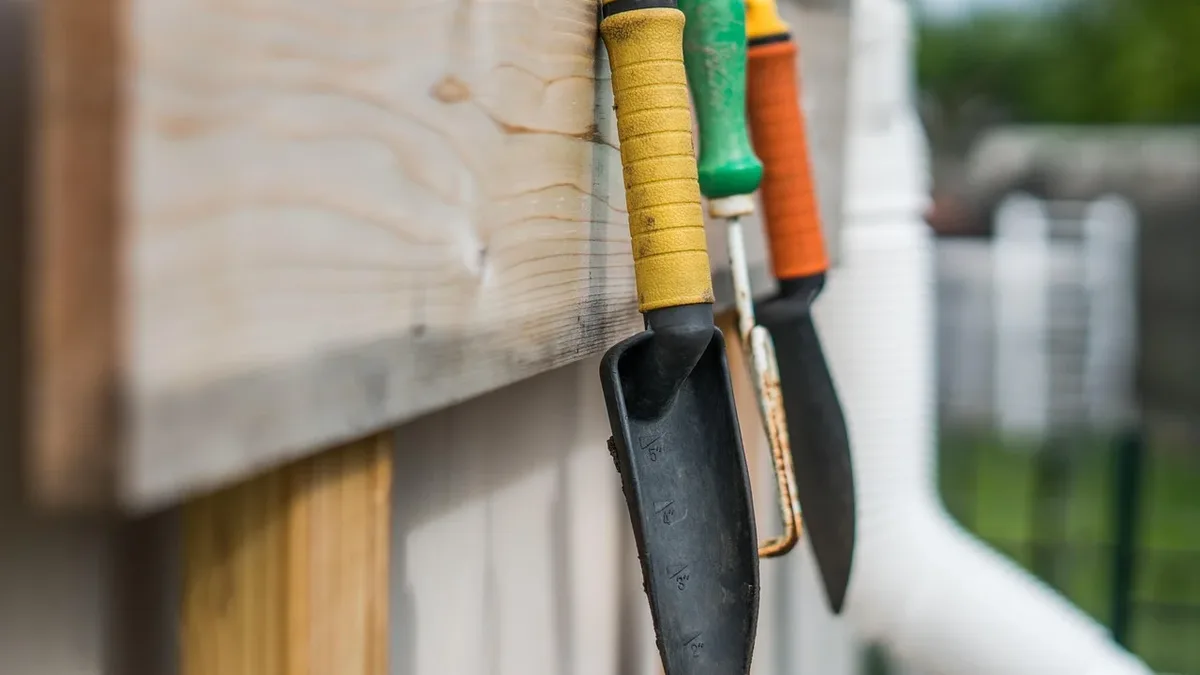
A Hori Hori is a multipurpose soil knife designed for a wide array of gardening tasks that require both cutting and digging. Its primary function is for planting, allowing a user to dig a precise hole, slice through root-bound containers, and tamp soil around a new plant with the flat of the blade. The serrated edge on one side is effective for sawing through tough roots, small woody stems, and compacted sod. The straight sharp edge on the opposite side is used for slicing open bags, dividing perennials, and cutting twine or light-duty garden fabric. The depth markings etched into the blade provide a quick guide for planting bulbs or small transplants at consistent depths. It serves as a compact alternative to carrying a trowel, a knife, and a weeding tool simultaneously.
Pros and cons
A significant pro is its unparalleled versatility, replacing several single-purpose tools and reducing the number of items a gardener needs to carry. The robust construction, often from a single piece of stainless or carbon steel, makes it durable and resistant to bending under pressure. A common con is that its multipurpose nature means it is not the absolute best tool for any single task; a dedicated shovel is better for moving large volumes of soil, and a dedicated pruning saw is superior for larger branches. Users often regret choosing a model with a poor-quality handle or insufficient blade markings, as these flaws undermine daily utility. The most frequent mistake is using the knife for excessive prying or leverage, which can damage the tip or cause handle separation on poorly made versions. Another drawback is the requirement for regular cleaning, drying, and occasional sharpening to prevent rust and maintain effectiveness, a step sometimes neglected by casual users.
Who it suits
This tool suits the serious home gardener or landscaper who performs varied tasks in a single gardening session and values efficiency over specialized equipment. It is ideal for gardeners who frequently plant containers, divide perennials, weed, and undertake light digging, as it streamlines transitioning between these jobs. Foragers and botanical enthusiasts also find it suitable for its precise digging and cutting capabilities when collecting specimens or harvesting roots. It is less suited for someone with a very small, container-only garden, where a simple hand trowel suffices, or for those who only perform one type of repetitive landscape task. Individuals with significant wrist or hand strength limitations may find its weight and required leverage for digging to be a drawback compared to lighter, task-specific tools. Ultimately, it is a match for the practical gardener who appreciates a sturdy, no-nonsense implement that can handle decades of diverse use.