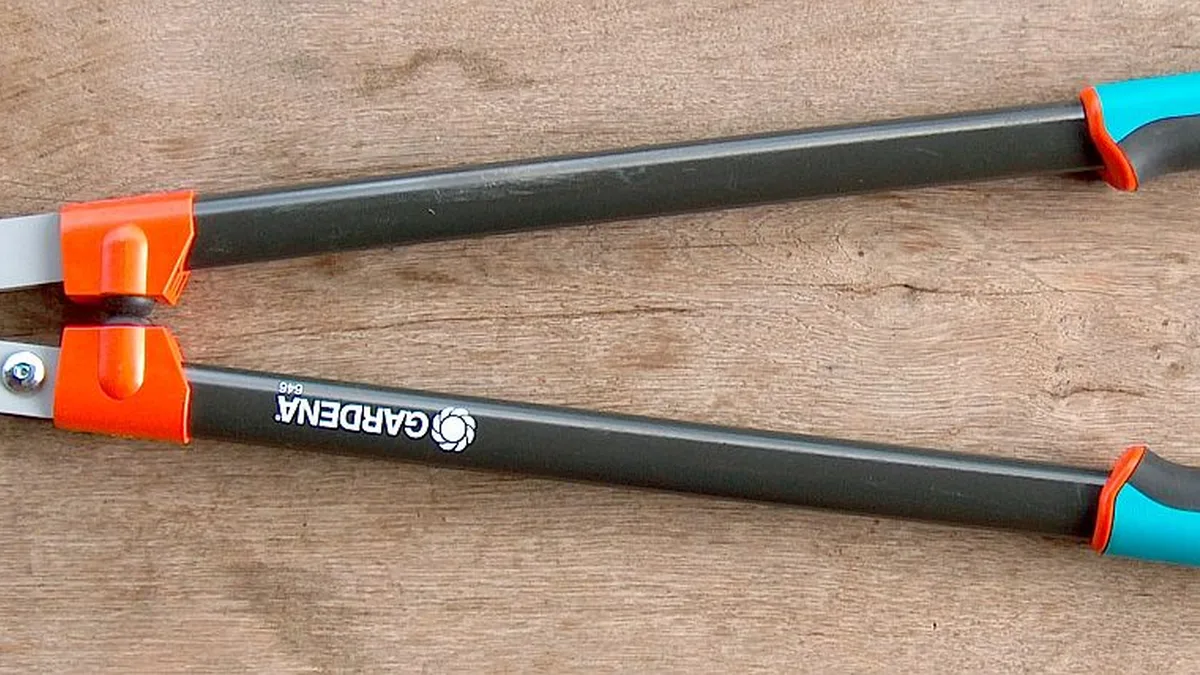
Loppers
| Country of origin | United States |
|---|---|
| First created | Late 19th century |
| Original use | Pruning branches too thick for hand shears |
| Cutting capacity | Typically 1 to 2 inches (varies by model) |
| Handle type | Bypass or anvil, with long handles for leverage |
| Primary use | Pruning shrubs, small trees, and woody stems |
| Common materials | Steel blades, aluminum or fiberglass handles |
Origin and history
Loppers originated in Europe, with their development closely tied to the evolution of pruning shears and the need for greater leverage when cutting thicker branches. The basic bypass cutting principle, where a sharp blade passes by a hooked anvil, was adapted from smaller hand pruners and scaled up. The addition of long handles, initially crafted from sturdy wood, provided the necessary mechanical advantage. This tool form was widely established and documented by the late 19th century, coinciding with the rise of formal horticulture and orchard management. The refinement of steel alloys and the introduction of telescopic or geared mechanisms came significantly later in the 20th century. The design has remained fundamentally consistent, with modern improvements focusing on materials, ergonomics, and force multiplication.
What it is for
Loppers are designed for cutting woody stems and branches that are too thick for hand pruners but typically do not require a saw. Their primary function is the clean removal of live or dead wood up to approximately two inches in diameter, depending on the model's power and blade quality. They are essential for thinning out crowded shrubs, removing suckers and water sprouts from trees, and cutting back perennial stems. The long handles allow a user to reach into the center of a dense plant without excessive hand strain. A clean cut made by sharp lopper blades helps plants heal properly and reduces the risk of disease entry. They are not suitable for cutting large, mature tree limbs, fibrous materials like rope, or anything other than plant material.
Pros and cons
The primary advantage of loppers is their ability to make precise, clean cuts on substantial branches with relative ease, promoting plant health. Their extended reach provides access to awkward spots within a shrub or small tree while keeping the user's hands away from thorns. High-quality models with gear or compound lever systems dramatically reduce the physical effort required for each cut. A significant con is that cheap loppers with poor steel will dull quickly, crush rather than cut branches, and cause repetitive strain injuries from excessive force. Users often regret purchasing loppers that are too heavy or too long for their strength and stature, making precise control difficult. The most common mistake is attempting to cut wood that exceeds the tool's capacity, which can permanently damage the pivot joint, spring, or blades, rendering them useless.
Who it suits
Loppers suit gardeners, landscapers, and orchardists who regularly maintain shrubs, small trees, vines, and woody perennials. They are particularly well-suited for individuals who need to make many pruning cuts and prioritize plant health through clean wound creation. Homeowners with established gardens containing overgrown lilacs, roses, or fruit trees will find them indispensable for renewal pruning. Their extended reach also benefits those who wish to prune without constantly bending or kneeling. People with limited hand strength should seek out geared loppers, as standard bypass models may be too difficult to operate on hard wood. They are not ideal for someone with only a small lawn or container garden, where a simple hand pruner would be sufficient for all tasks.