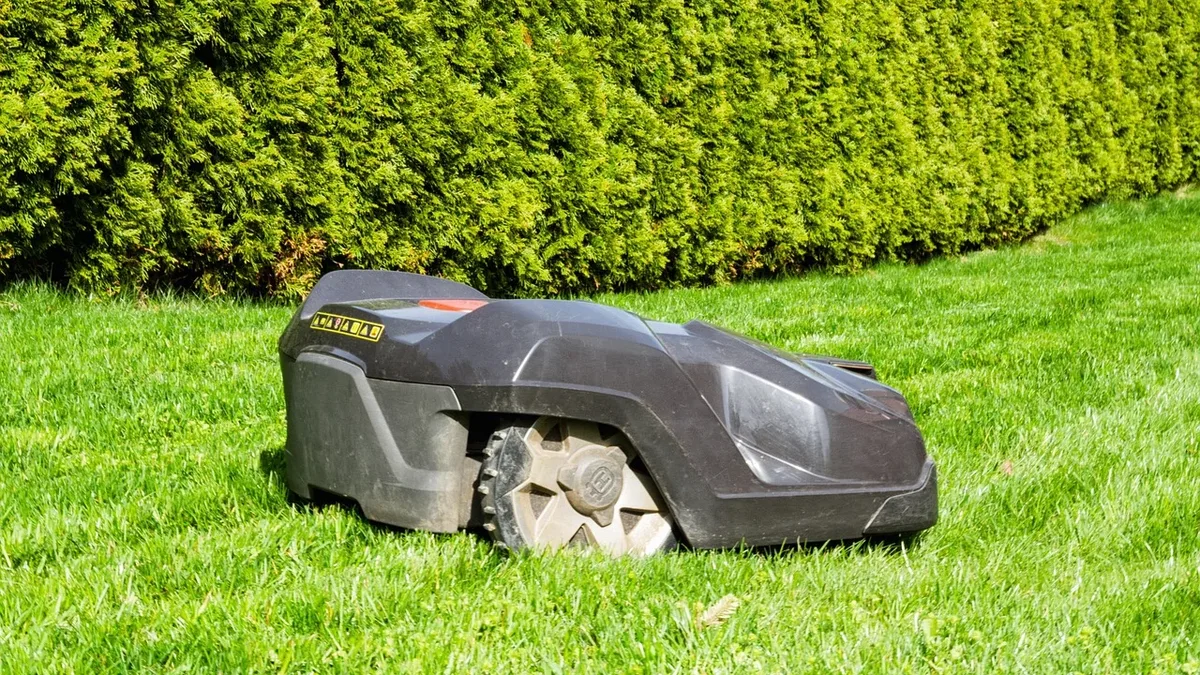
Robotic Lawnmower
| Cutting width | Typically 20 to 60 centimeters |
|---|---|
| Power source | Rechargeable battery |
| Autonomous operation | Yes, via boundary wire and sensors |
| Typical lawn size | Small to medium residential lawns |
| Charging | Automatic return to docking station |
| Cutting system | Multiple rotating blades |
| Safety features | Lift and tilt sensors, blade brake |
Origin and history
The concept of an autonomous lawn mowing machine originated in Europe during the late 1980s and early 1990s. The first commercially viable robotic lawnmowers were developed and launched in Sweden in the mid-1990s. These early models established the fundamental design principles of a compact, battery-powered mower that navigates within a boundary wire. Japanese electronics firms also contributed to early research and development in this field during the same period. The technology saw gradual refinement and increased adoption in European markets throughout the 2000s, where smaller garden plots were common. It was not until the 2010s that the technology became more widely available and technologically mature in other global markets, including North America.
What it is for
A robotic lawnmower is designed to autonomously maintain a lawn by performing frequent, light trimming passes. Its primary function is to cut grass consistently to a set height, eliminating the need for manual push mowing or riding mower operation. The machine operates within a perimeter defined by a buried or staked boundary wire that emits a radio signal. It uses random or systematic navigation patterns to cover the entire enclosed area over multiple sessions. By mowing little and often, it returns fine grass clippings to the lawn as mulch, which fertilizes the soil. This tool is specifically engineered for the regular upkeep of residential and small commercial lawns, not for clearing tall, overgrown vegetation.
Pros and cons
A significant advantage is the consistent lawn quality and health achieved through frequent mulching, alongside the substantial time savings for the owner. The machines are generally quiet, emit no direct exhaust fumes, and can operate in light rain, offering scheduling flexibility. However, a genuine drawback is the initial installation complexity and cost, which includes laying the boundary wire and potential landscaping adjustments. Common user regrets stem from underestimating setup time or encountering wire breakages from aerators or rodents, which require troubleshooting. Robotic mowers are also ineffective on very steep slopes, complex terrains with many obstacles, and lawns with mixed rough grasses or weeds. The most frequent mistake is purchasing a model with insufficient battery capacity or cutting width for the lawn area, leading to incomplete coverage or constant recharging.
Who it suits
This tool best suits homeowners with flat to moderately sloped, relatively obstacle-free lawns who value time and convenience over hands-on gardening. It is particularly appropriate for individuals with physical limitations that make operating a traditional mower difficult or unsafe. People who travel frequently or have irregular schedules benefit from the automated, consistent maintenance that keeps the lawn presentable. It is a poor fit for properties with very complex landscapes, numerous garden beds, or rough, uneven terrain that requires a brush cutter. Those who take pride in precise stripe patterns or a perfectly manicured single weekly cut may find the random, subtle result less satisfying. Ultimately, it suits someone willing to invest upfront in installation and learn basic maintenance, in exchange for eliminating the recurring chore of mowing.