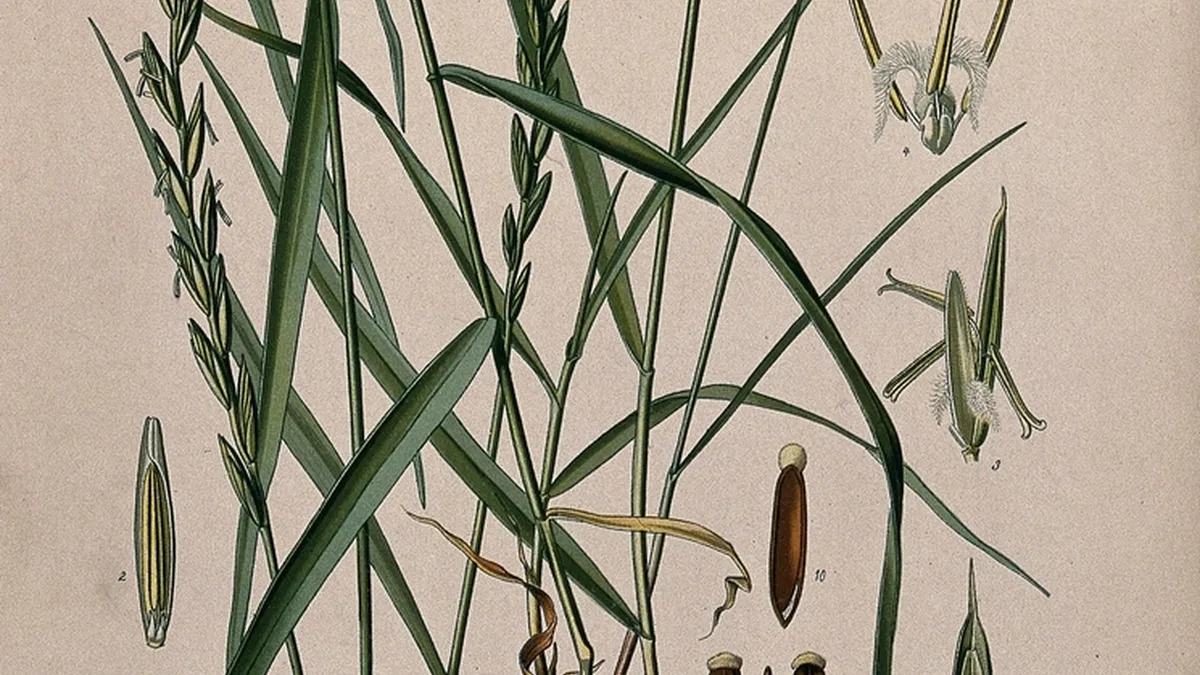
Couch Grass
| Common name | Couch Grass |
|---|---|
| Botanical name | Elymus repens |
| Type | Perennial grass |
| Status | Invasive weed in cultivated land |
| Original use | Forage and soil stabilization |
| Control method | Persistent removal of rhizomes or systemic herbicide |
| Propagation | Primarily via rhizomes |
Origin and history
Couch Grass, known botanically as *Elymus repens*, is a perennial grass species native to Europe, Asia, and northern Africa. Its presence has been documented for centuries, with it being a well-established component of the flora in these regions since ancient times. The plant spread to other continents, including North America and Australia, primarily through human activity, notably as an unintentional hitchhiker in soil and with crop seeds. It is not a cultivated variety bred by humans but a wild species that has adapted aggressively to human-disturbed environments. Historical agricultural texts from the 18th and 19th centuries frequently document it as a persistent weed in cultivated fields. Its common name, "couch," derives from the Old English "civice," meaning alive or vivacious, referencing its tenacious, living rhizome system.
What it was bred for
Couch Grass is not a purpose-bred crop but a wild species that has never been selectively improved for desirable agricultural traits. In contrast to cultivated grasses, it has naturalized and spread due to its exceptionally invasive vegetative growth. Historically, its robust rhizomes were sometimes gathered for purported medicinal uses, such as in diuretic or tonic preparations, though this was never a formal agricultural pursuit. In some contexts, particularly in poorer soils, it has been tolerated as a hardy pasture grass for grazing animals due to its ability to survive under harsh conditions. Its primary "purpose" from an ecological standpoint is as a pioneer species that colonizes disturbed ground. No breeding programs exist to enhance it as a lawn or forage crop, as its invasive characteristics are overwhelmingly problematic.
Life cycle
Couch Grass is a perennial grass that propagates both by seed and, far more aggressively, by an extensive network of underground stems called rhizomes. The plant emerges in spring from rhizome buds or from seeds that can remain viable in the soil for several years. Through the growing season, it focuses energy on producing tall flowering stems and on extending its rhizome system, which can grow several inches per week. Flowering typically occurs in mid to late summer, producing seed heads that can contribute to new infestations. In autumn, top growth dies back after frost, but the rhizome system remains alive and dormant underground throughout the winter. This lifecycle allows a single small fragment of rhizome to regenerate a complete new plant, making eradication extremely difficult once established.
Character and appearance
Couch Grass forms dense, patchy colonies rather than a uniform sward. Its leaves are flat, linear, and bluish-green, with a rough texture on the upper surface and a prominent central vein. The leaf sheaths are typically smooth and the ligule is short and membranous. The flowering stems are erect, reaching 30 to 120 centimetres in height, and bear a spike-like inflorescence with multiple two-rowed spikelets arranged directly on the stem. The most defining characteristic is its creeping, jointed, pale yellow or white rhizome system, which is sharp-tipped and can penetrate hard soil. These rhizomes store carbohydrates, allowing the plant to survive drought and repeated cutting. The overall appearance is of a coarse, vigorous grass that quickly outcompetes surrounding vegetation.
How to grow Couch Grass
Deliberately cultivating Couch Grass is not recommended for gardeners or farmers due to its highly invasive nature, which makes it a serious weed. If one must establish it for erosion control on difficult sites, it requires no fertility input and will thrive in almost any soil type from sand to heavy clay. The simplest method is to plant small sections of rhizome about five centimetres deep in soil during spring or autumn; these will quickly produce new shoots. It tolerates full sun to partial shade and is exceptionally drought-tolerant once established due to its deep rhizomes. No watering, feeding, or mowing regime is necessary for its survival, as it grows aggressively without care. Any planting should be contained with deep, impermeable root barriers to prevent uncontrollable spread into adjacent areas.
When to plant Couch Grass
The most effective time to plant rhizome fragments is in early spring, as soil temperatures rise and moisture is available, which stimulates rapid bud break and growth. Autumn planting is also possible, allowing the rhizomes to establish a root system before winter dormancy and then explode with growth the following spring. Planting during the hot, dry summer months is less successful unless consistent irrigation is provided, as the shallow-planted fragments can desiccate. Seed can be sown in spring or early autumn, though propagation from seed is slower and less reliable than from rhizomes. For those attempting to establish it as a cover, timing is not critical due to the plant's robustness, but spring planting yields the quickest cover. It is crucial to note that in most regions, introducing this plant is irresponsible due to its weed status.
How long does Couch Grass take to grow
From a planted rhizome fragment, new shoots typically emerge from the soil within one to two weeks under favourable moist conditions. Visible above-ground growth is rapid, with the plant forming a small patch within a month of emergence. A single node or piece of rhizome can produce a dense patch covering a square metre within a single growing season due to its aggressive lateral spread. The rhizomes themselves can grow several centimetres per day during peak growing periods, allowing the plant to colonize new territory swiftly. From seed, establishment is slower, taking several weeks to germinate and not forming significant rhizome networks until the second year. Complete ground cover from a small starter planting can be achieved in one season, which is precisely why it is so problematic as an invasive weed.
Pros and cons
It requires absolutely no maintenance, fertilization, or irrigation once established, surviving in poor and compacted soils. The significant and overwhelming cons are its aggressively invasive rhizome system, which invades garden beds, lawns, and agricultural fields, outcompeting desired plants. It is exceptionally difficult and time-consuming to eradicate, as any small piece of broken rhizome left in the soil will regrow. Common mistakes include thinking it can be controlled by regular mowing or by superficial digging, which often just spreads the rhizome fragments. Those who regret "planting" it are almost always gardeners or farmers who find it has become an uncontrollable pest, smothering crops and ornamentals.
Who it suits
Couch Grass suits only extremely specific, non-agricultural scenarios where soil stabilization is the sole priority and the area can be permanently isolated. This might include controlling severe erosion on steep slopes, mine tailings, or industrial sites where no other vegetation is viable. It is not suited for any domestic lawn, pasture, or garden setting due to its invasive character. It may be tolerated in some low-quality, unmanaged grazing lands, though even there it is considered an inferior forage grass that can dominate and reduce biodiversity. Botanists or land managers studying invasive species mechanics might deliberately contain it for research purposes. For virtually all home gardeners and commercial growers, it is a weed to be eradicated, not a crop to be cultivated.
Latest Couch Grass news
Latest reporting
Crabgrass Signals Lawn Health Problems
Crabgrass is an annual weed that emerges in spring and signals underlying lawn issues like compacted soil, thinning grass, improper mowing, and...
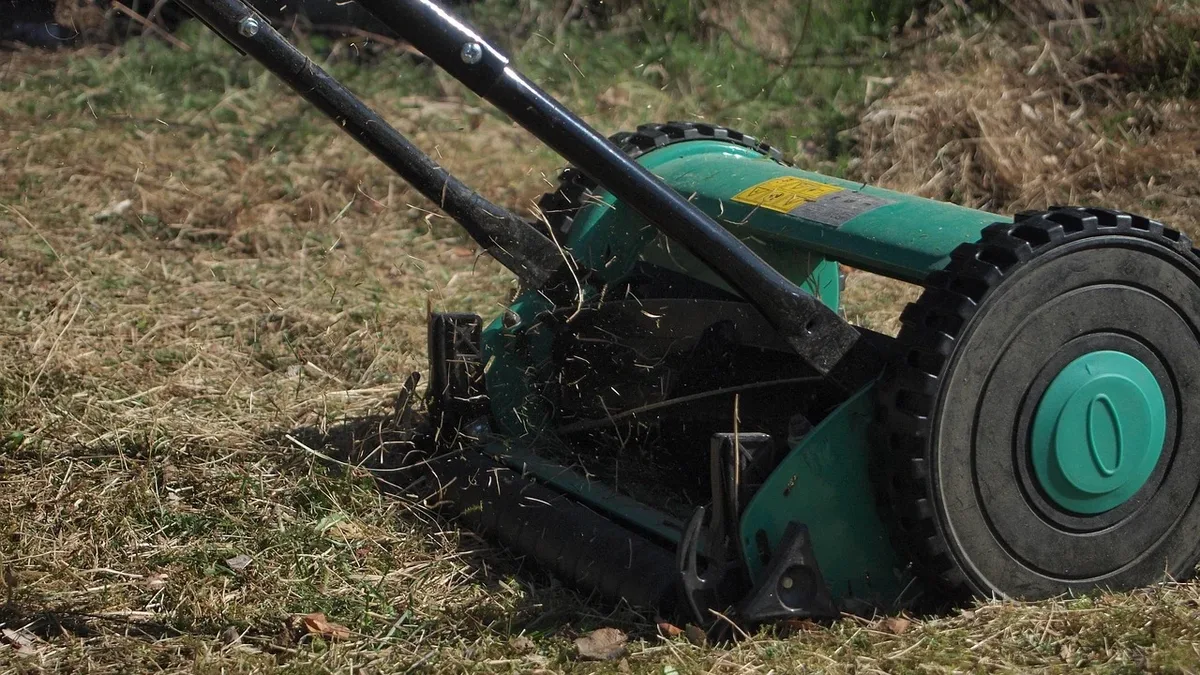
How Often to Mow Your Lawn in August
August lawn mowing should be responsive, not scheduled. The key is the one-third rule: only cut when you can remove one-third or less of the grass...