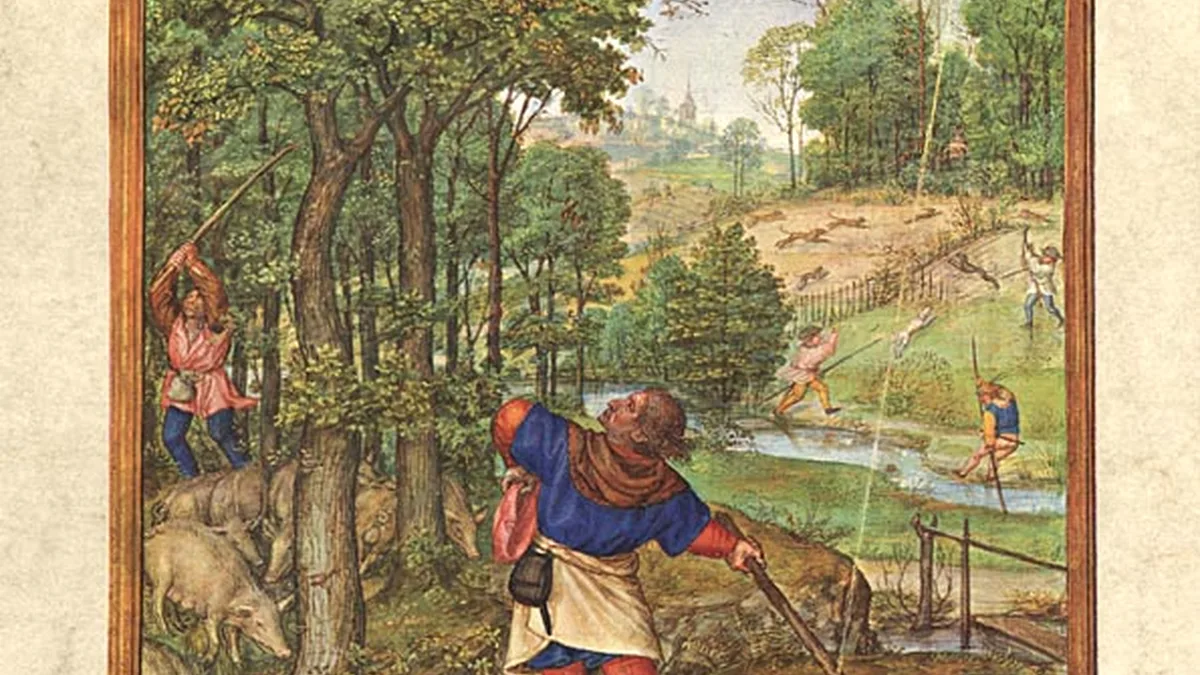
November
| Country of origin | Roman calendar |
|---|---|
| First created | 8th century BC (Roman calendar reform) |
| Original use | Ninth month in the original Roman calendar |
| Number of days | 30 |
| Season (Northern Hemisphere) | Late autumn |
| Season (Southern Hemisphere) | Late spring |
| Primary astronomical event | Leonids meteor shower (peak mid-month) |
| Associated tasks (horticulture) | Planting spring bulbs, protecting tender plants from frost |
Origin and history
November originates from the Roman calendar, where it was the ninth month, as reflected in its name derived from the Latin "novem," meaning nine. It was established in the ancient Roman calendar, which is believed to have been created in the 8th century BCE. The order and length of months were later reformed under Julius Caesar with the introduction of the Julian calendar in the 1st century BCE, which solidified November's position as the eleventh month. The Anglo-Saxons referred to this period as "Blōtmōnaþ," or "blood month," associated with the slaughter of livestock before winter. Its placement in the annual cycle has remained consistent through subsequent calendar reforms, including the Gregorian calendar adoption in the 16th century. The month's historical significance is tied to agricultural and cultural transitions in the Northern Hemisphere, marking a definitive shift from autumn to winter.
What it is for
November serves as a pivotal transitional period in the temperate Northern Hemisphere, marking the conclusion of the harvest season and the onset of winter dormancy for many plants. It is a critical month for completing essential garden tasks, including the final clearing of spent annuals and vegetable beds to reduce overwintering sites for pests and diseases. The month is for planting spring-flowering bulbs, such as tulips and daffodils, while the soil remains workable but cold enough to prevent premature growth. It is also the primary time for applying a protective layer of mulch to perennial beds, roses, and tender plants after the ground has frozen to insulate roots from freeze-thaw cycles. For arboriculture, November is often recommended for planting bare-root trees and shrubs, as they can establish roots in the cool, moist soil without the stress of supporting top growth. Additionally, it is a key period for winterizing irrigation systems, cleaning and storing tools, and constructing protective structures for sensitive plants against coming frosts and snow.
Pros and cons
A significant pro of November is the ideal planting conditions it provides for many hardy trees, shrubs, and bulbs, which benefit from establishing roots in cool, moist soil without summer heat stress. The dormant season also allows for major pruning of deciduous trees with minimal sap loss and reduced risk of disease transmission from pests. However, a major con is the highly unpredictable and often rapidly deteriorating weather, where sudden hard freezes can catch gardeners off guard, damaging plants that were not properly prepared. Many people regret attempting to plant or transplant marginally hardy specimens too late in the month, as the root systems fail to establish before the soil becomes fully frozen. The common mistake is applying mulch too early, which can create a cozy habitat for rodents to nest and feed on plant bark, leading to girdled trees and shrubs over winter. Furthermore, the shortened days and frequently wet, cold conditions can compact soil if worked when saturated, causing long-term damage to soil structure that outweighs the benefit of any late task.
Who it suits
November suits the proactive and organized gardener who has a clear seasonal checklist and is prepared to work in often cold and damp conditions to secure the garden for winter. It is ideal for those focused on long-term landscape projects, such as installing new hardscape elements or planting bare-root hedges and trees, taking advantage of nursery end-of-season sales. The month suits vegetable growers who have prepared late-season, cold-hardy crops like kale and Brussels sprouts, which can sweeten with frost, and who have successfully used season-extension techniques like cold frames. It is less suited to gardeners in regions with early, severe winters where all outdoor work effectively ceases by mid-month, making timing absolutely critical. November also suits the meticulous horticulturist who values the cleanup and sanitation aspects of gardening to prevent disease carryover, a task others may find tedious. Finally, it is a fitting month for planners and seed catalog enthusiasts who shift their focus indoors to reviewing the past season's notes and preparing orders for the next year's garden.