Hydrangeas: Unique Species for Your Garden
A gardening expert recommends lesser-known hydrangea varieties beyond common types, detailing unique medium-to-large and compact options with growing tips.
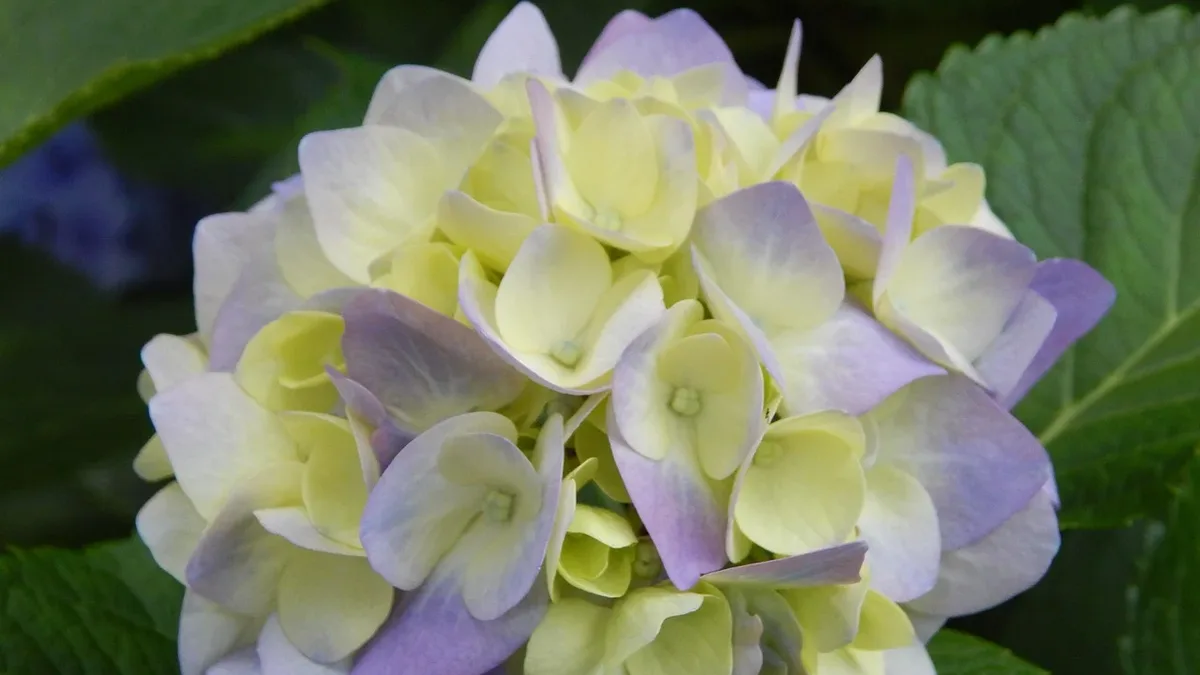
Hydrangea popularity has fluctuated, but many unique species remain overlooked. According to Fine Gardening, while breeders focus on familiar types, the wider genus of about 80 species offers hidden gems. The author argues these plants are not widely available due to a lack of awareness, not difficulty.
Medium and Large Hydrangeas
For strong structural focal points, several larger hydrangea varieties provide presence. They range from substantial shrubs to climbing vines, offering colorful flowers and distinctive foliage.
Rough-leaved hydrangea (H. Aspera subsp. Villosa) is described as one of the most beautiful. Its common name is misleading, as the large leaves have a velvety texture. Pollinators flock to its bicolor blossoms of creamy white sepals surrounding lavender-purple fertile flowers in mid-to-late summer. The Plum Passion cultivar features purple-green foliage that deepens to chocolate brown with bright raspberry undersides. Another excellent cultivar is 'Sam McDonald'.
Himalayan tree hydrangea (H. Robusta) is prized for its magnificent leaves, which can grow up to 1 foot long and 8 inches wide with a soft velveteen surface. The author states this foliage alone is reason enough to grow it, though its large lacecap flowers with purple fertile centers surrounded by white-to-cream sterile florets are also showy.
Mexican climbing hydrangea (H. Seemannii) is an attractive, self-clinging evergreen vine. It produces white lacecap flowers from drumstick-like buds. The report assures gardeners this vine is better behaved than invasive species, as it attaches to a tree's central trunk without laterally subverting the host's ability to photosynthesize. Its dense growth can provide nesting sites for birds.
Woolly hydrangea (H. Heteromalla) is a strapping small tree or large shrub with leathery, textured leaves nearly 1 foot long. Its flowers feature an intriguing display where white sterile florets tumble outward from a central disk of fertile florets that range from white to pink to lavender.
Narrow-petaled hydrangea (H. Angustipetala) offers a rare color for the genus: yellow. This species has very early-blooming, fragrant flowers. The Golden Crane cultivar provides golden yellow fertile flowers surrounded by white sterile florets in late spring. Another exceptional cultivar, 'Hoop', has distinctive rounded sterile florets that bloom in early summer.
| Name | Zones | Size | Conditions | Native Range |
|---|---|---|---|---|
| H. Aspera subsp. Villosa | 7-9 | 5 to 12 ft tall and wide | Partial shade; moderately moist, humus-rich, well-drained soil | China, the Himalayas, Indochina |
| H. Robusta | 7-9 | 10 ft tall and wide | Partial shade; moderately moist, cool, humus-rich soil | China, the Himalayas, Indochina |
| H. Seemannii | 7-10 | 30 to 50 ft tall, 10 to 30 ft wide | Partial shade; rich, evenly moist, well-drained soil | Mexico |
| H. Heteromalla | 7-9 | 20 ft tall, 8 ft wide | Partial shade; rich, medium to moist, well-drained soil | Bhutan, China, India, Nepal, Vietnam |
| H. Angustipetala | 6-9 | 5 to 6 ft tall and wide | Partial shade; rich, medium moisture, well-drained soil | Taiwan |
Small Hydrangeas
For tight spaces, several compact hydrangea species offer eye-catching blossoms and interesting forms. These smaller shrubs and perennials are ideal for adding detail to the garden.
Yellow-vein hydrangea (H. Luteovenosa) is a modest, mostly overlooked shrub with extraordinary hardiness. It features small leaves on deep purple, almost black stems. Its blossoms, with oversized white sterile florets surrounding small greenish-white fertile florets, are borne in the leaf axils rather than at branch ends. The report notes it is often confused with the similar H. Scandens. A recommended cultivar is 'Fragrant Splash', which has tiny leaves marked with creamy white and delightfully fragrant early spring flowers.
Tea of Heaven (H. Platyarguta) is an unusual hydrangea still often sold under the name Platycrater arguta. It has sublime, slightly nodding blossoms where both fertile and sterile florets put on a good show. Its lovely foliage turns golden in autumn. Two cultivars are generally available: 'Rosea' is a demure shrub under 2 feet tall with light pink flowers, while 'Kaeda' has a more robust 4-foot form with larger white flowers.
Cardiandra (H. Alternifolia) is a fully herbaceous perennial, not a woody shrub. It features lacecap-like flowers and is suited for woodland shade gardens. The source indicates it can be grown in colder zones with mulch protection.
| Name | Zones | Size | Conditions | Native Range |
|---|---|---|---|---|
| H. Luteovenosa | 6-9, possibly colder | 3.5 ft tall, 3 ft wide | Partial shade; evenly moist, humus-rich, well-drained soil | Japan, South Korea |
| H. Platyarguta | 6-9, possibly colder | 2 to 4 ft tall and wide | Partial shade; moist, humus-rich, well-drained soil | Eastern China, southern Japan |
| H. Alternifolia | 6-9, colder with mulch | 1.5 ft tall and wide | Partial shade; evenly moist, well-drained soil | Japan |
Conclusion and Recommendation
The Fine Gardening report concludes by highlighting the 'Fragrant Splash' cultivar of yellow-vein hydrangea for its early spring scent and variegated foliage.